Clothing at Carnarvon Museum
Explore our historic Clothing
Explore our historic Clothing
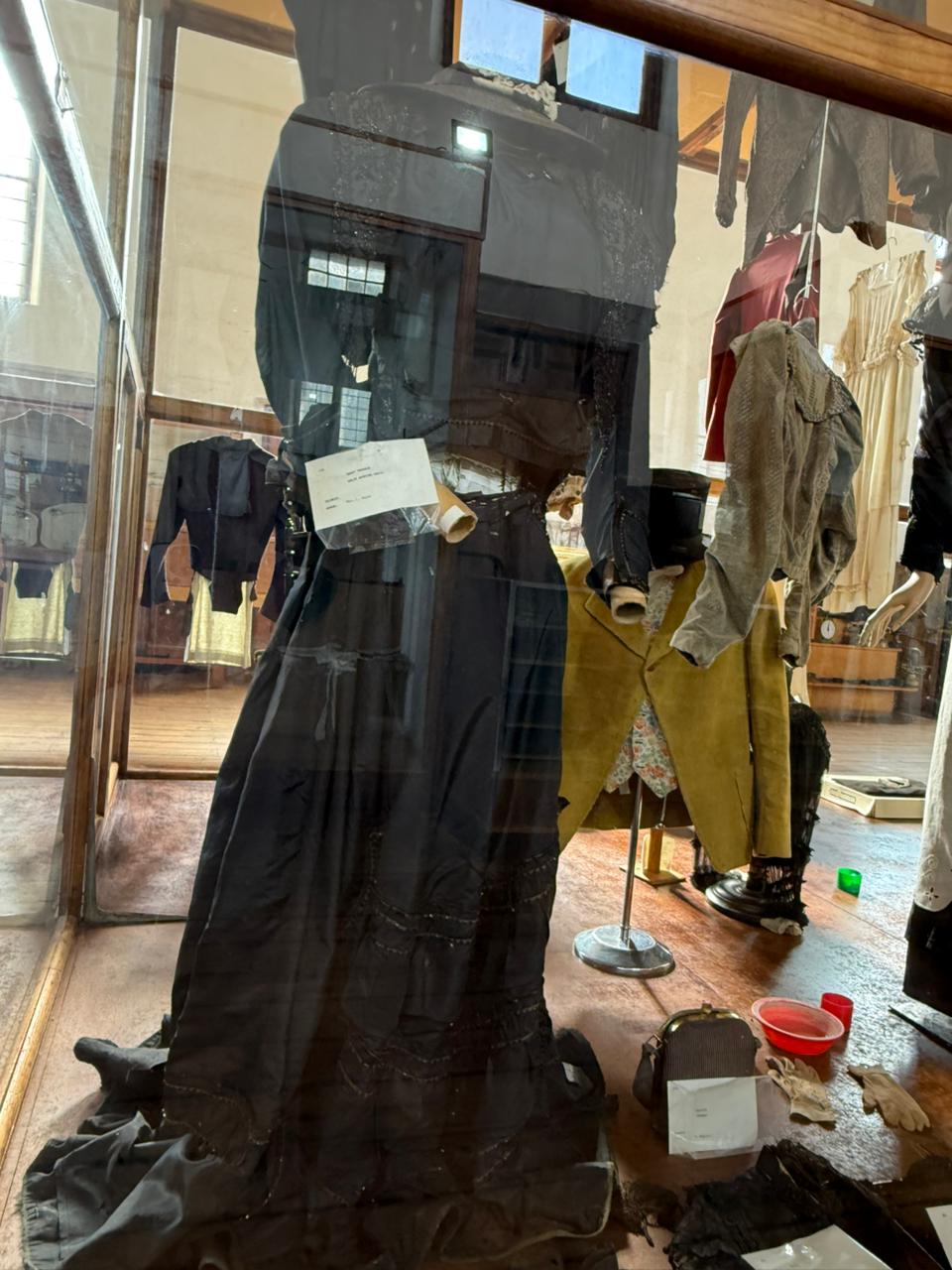
The dress is a full-length black gown displayed on a mannequin inside a museum glass case. It appears to be a historic Victorian or early 20th-century wedding dress, made in a style that was also commonly worn for formal occasions or mourning attire during that era. Key features: Color: Deep black, suggesting it may have been used either as a wedding dress in a tradition where brides wore black (common in some cultures and in the late 1800s) or as a formal/mourning gown.
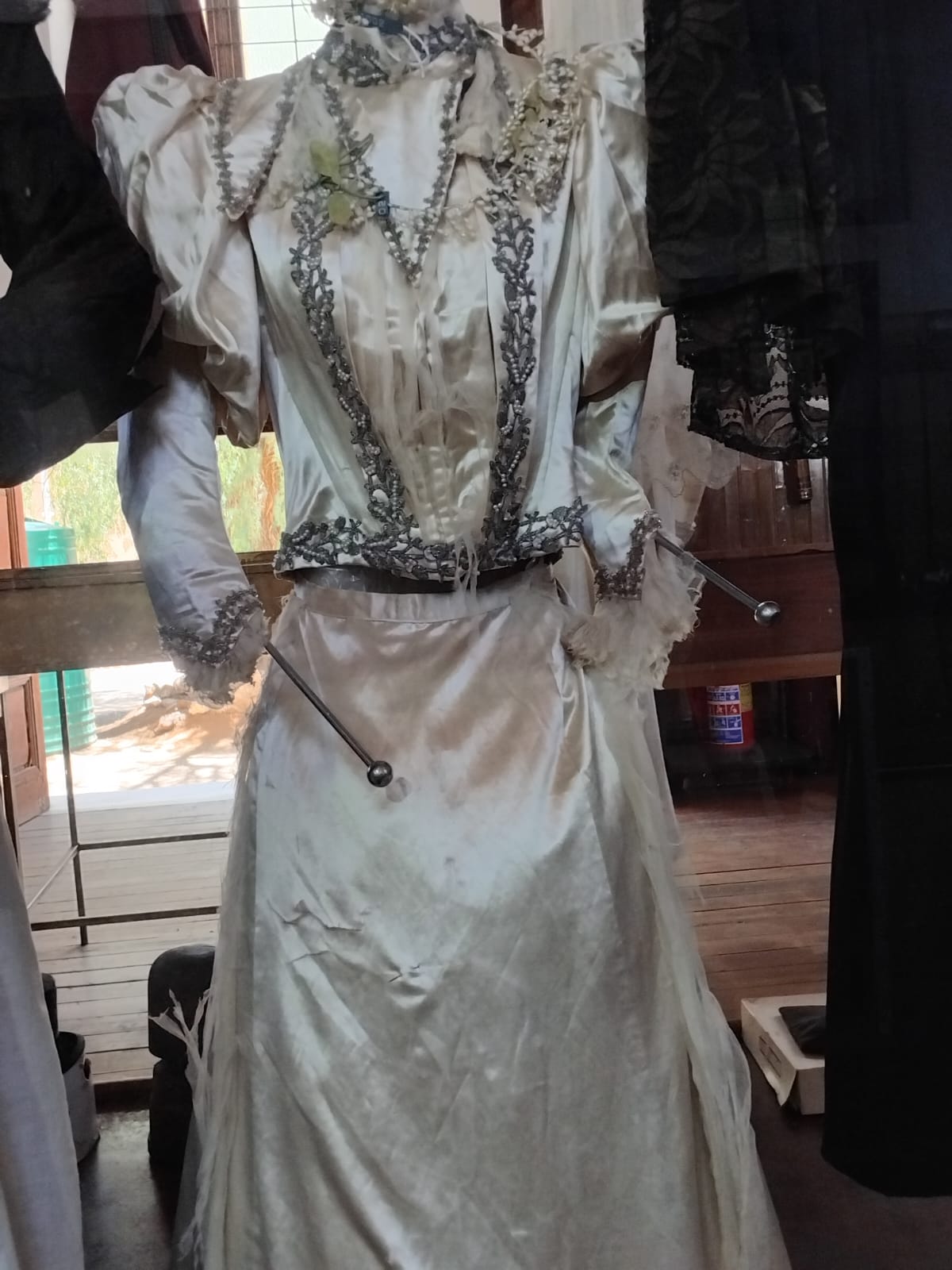
Color and Material: The dress is made of a rich ivory satin material. Design and Trim: It features elaborate trimming with applied decorative braid (passementerie), chiffon, sequins, and costly silk lace. Style: The gown has a high neckline, puffed sleeves, and a long skirt typical of late 19th or early 20th-century fashion. Details: The bodice and cuffs are heavily decorated with intricate, silvery-grey embroidery or braiding. Accessories: Two metal rods are positioned across the front of the skirt, likely used to display the garment's width or secure it for display.
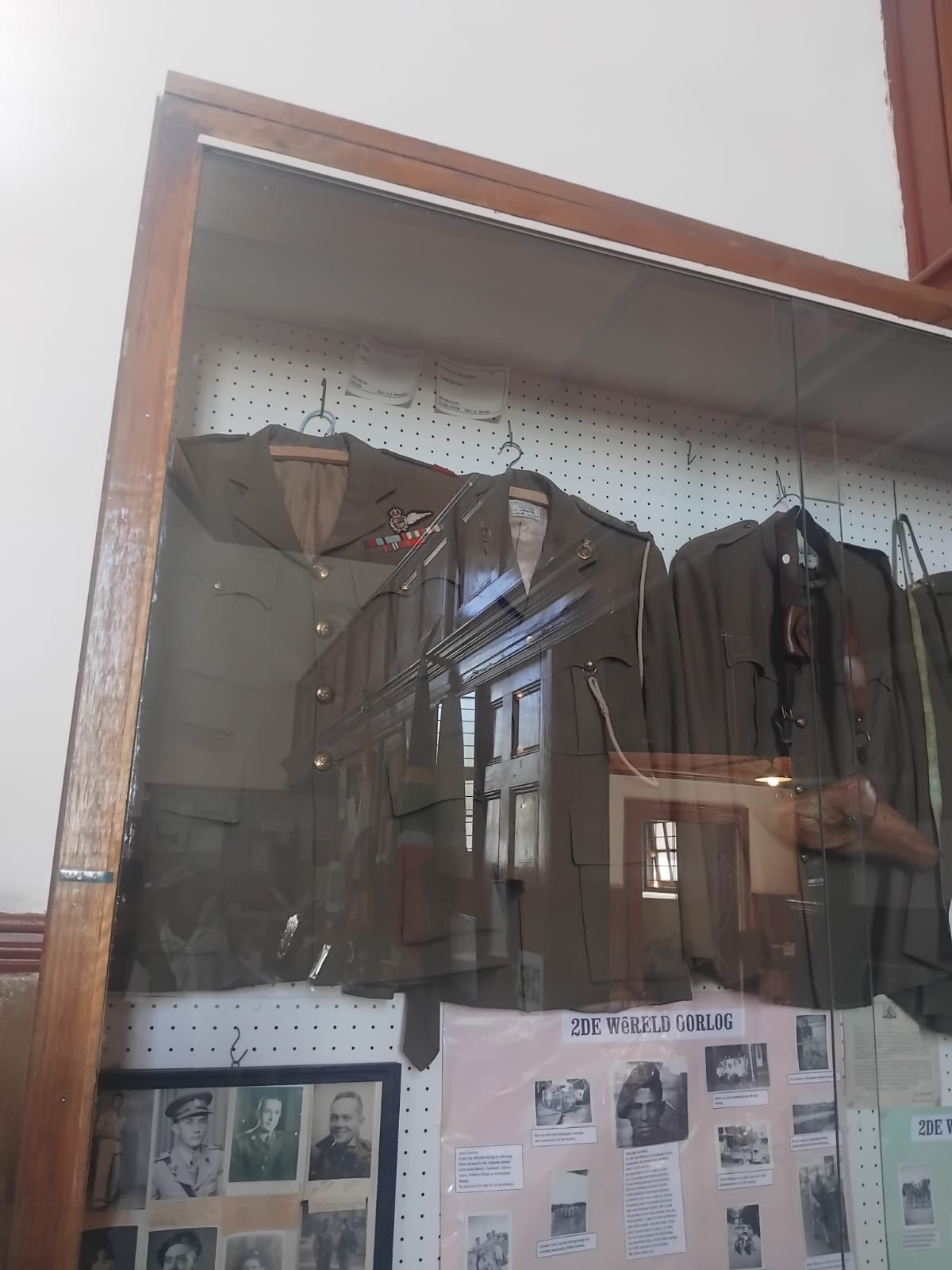
The text "2DE WÊRELD OORLOG" (Afrikaans for "2nd World War") is visible on a display card, indicating the exhibit's focus. Various military jackets and uniforms from the era are hanging in a glass display case. The display includes photographs of individuals, likely soldiers or historical figures related to the conflict.
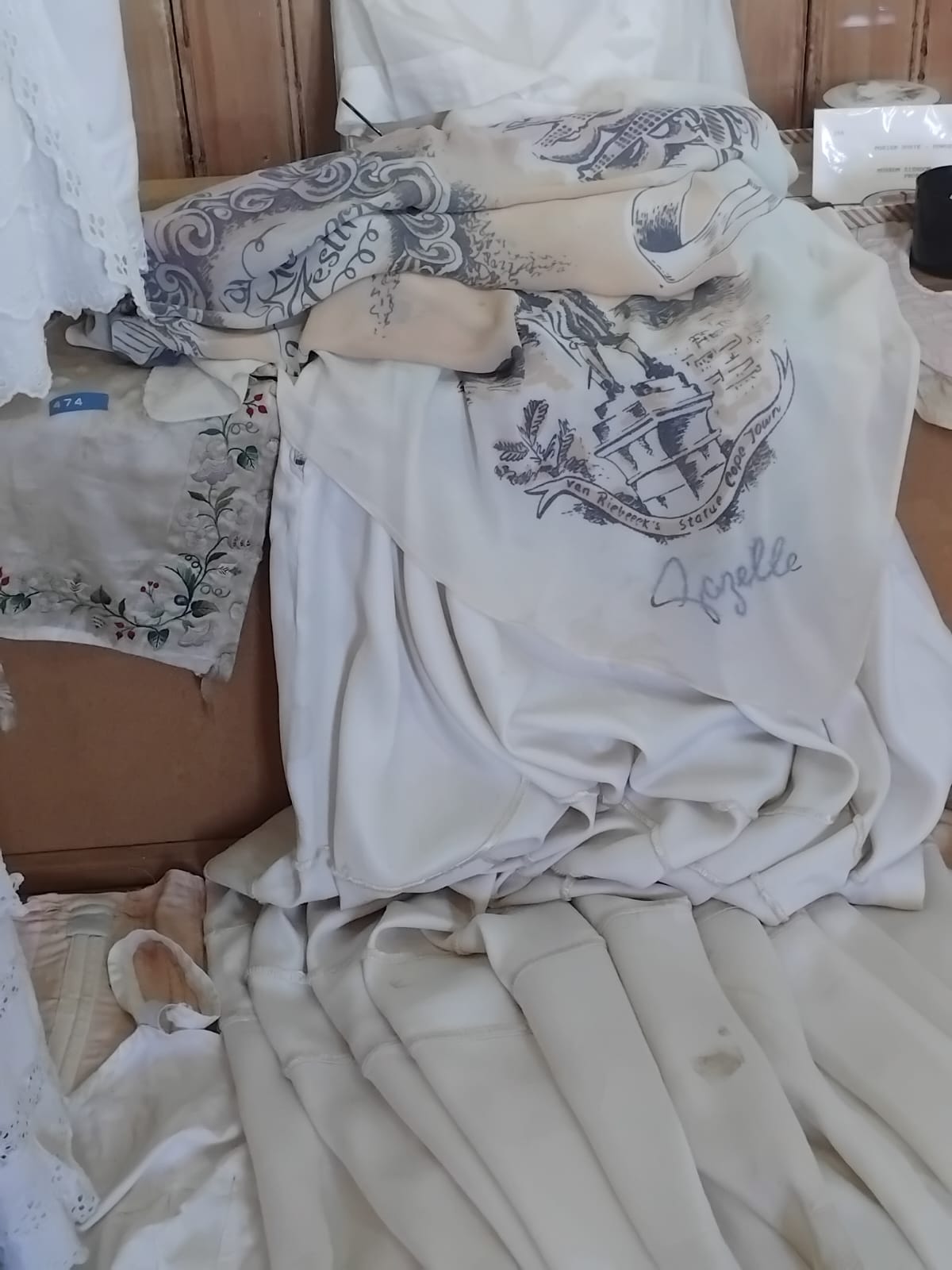
Printed Text: Text printed on one prominent piece of fabric includes phrases such as "Rieberek's Statue Cape Town" and "Qozelle". A number "474" is also visible on a small blue tag attached to another piece of fabric on the left. Drawings: The fabric with the "Rieberek's Statue" text features a drawing that appears to be a depiction of a statue on a pedestal, surrounded by some decorative elements.
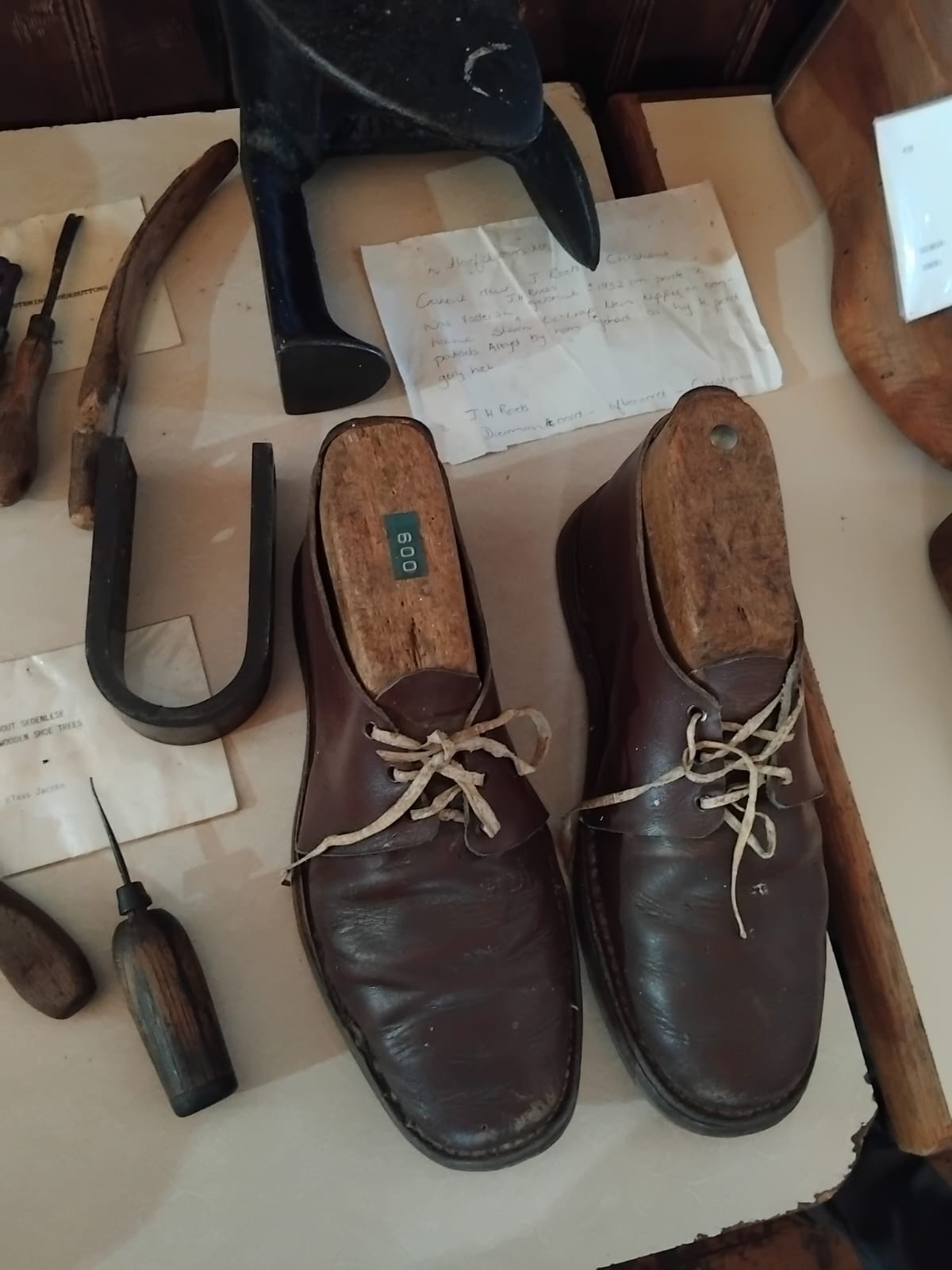
This is a pair of brown leather shoes with wooden shoe trees inside, possibly Veldskoen brand heritage shoes.
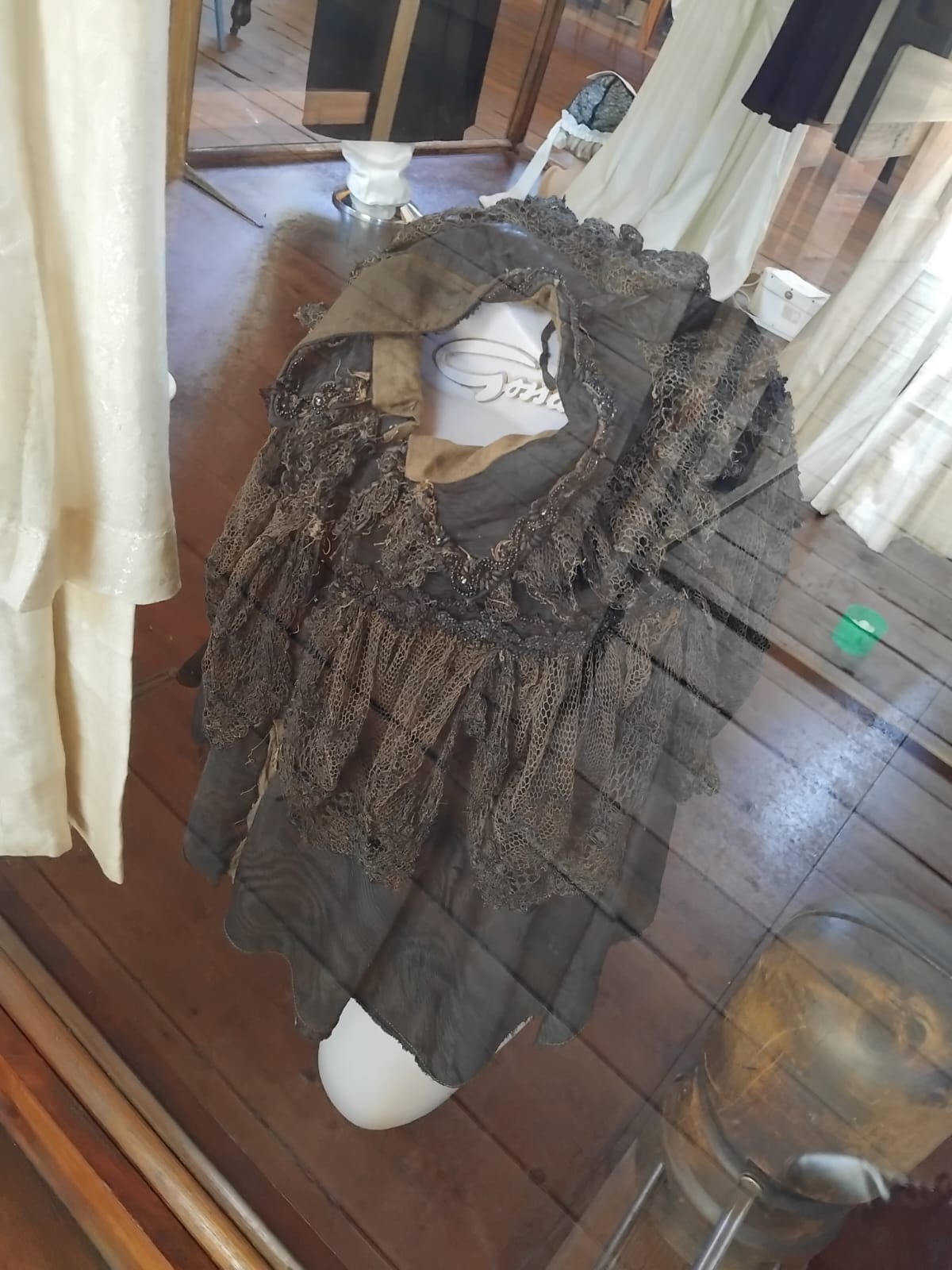
Color and Material: The dress is made of a rich ivory satin material. Design and Trim: It features elaborate trimming with applied decorative braid (passementerie), chiffon, sequins, and costly silk lace. Style: The gown has a high neckline, puffed sleeves, and a long skirt typical of late 19th or early 20th-century fashion. Details: The bodice and cuffs are heavily decorated with intricate, silvery-grey embroidery or braiding. Accessories: Two metal rods are positioned across the front of the skirt, likely used to display the garment's width or secure it for display.
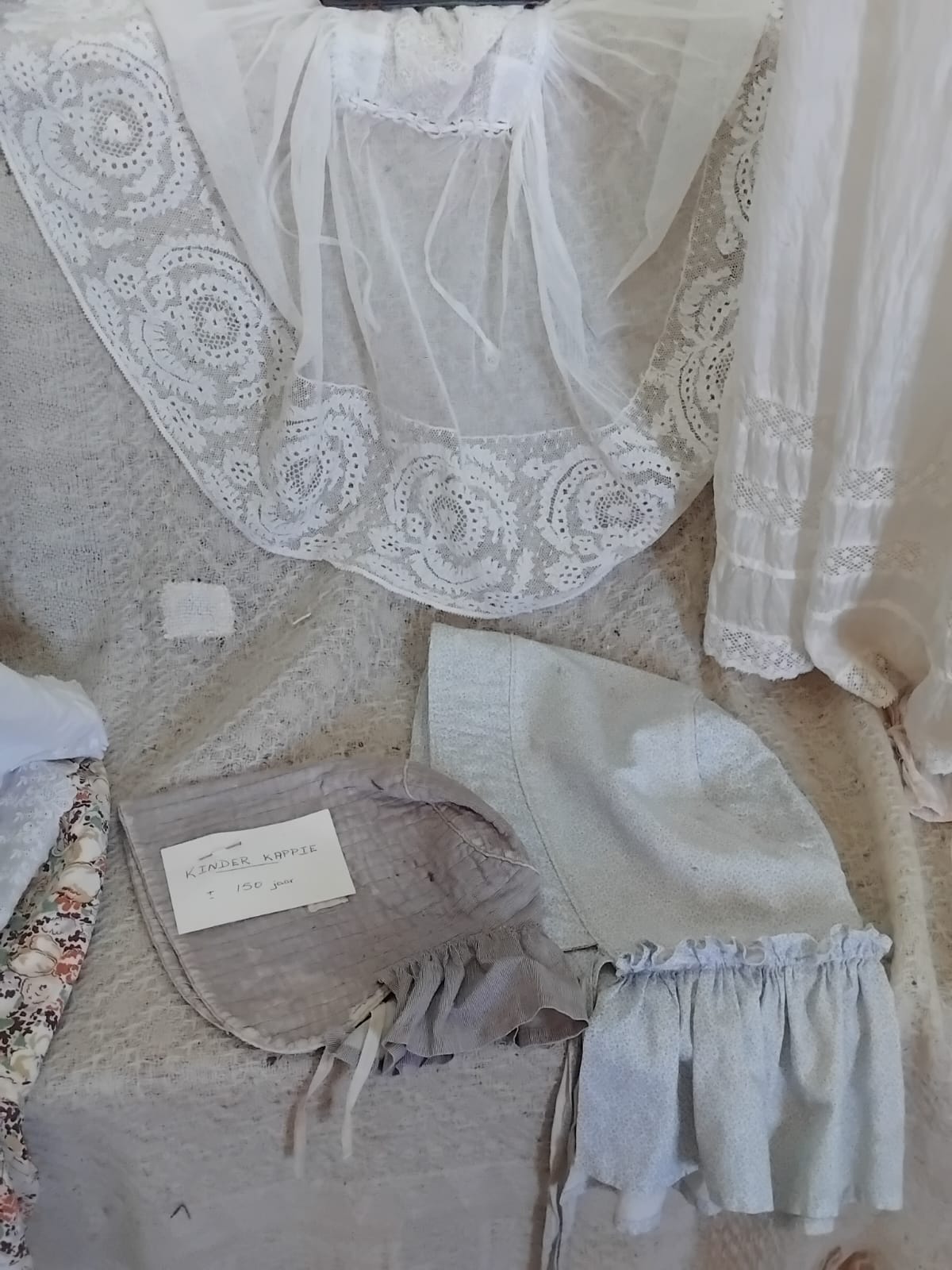
This is a collection of vintage baby clothes, including a christening dress and bonnets, possibly made of cotton or linen with lace detailing.
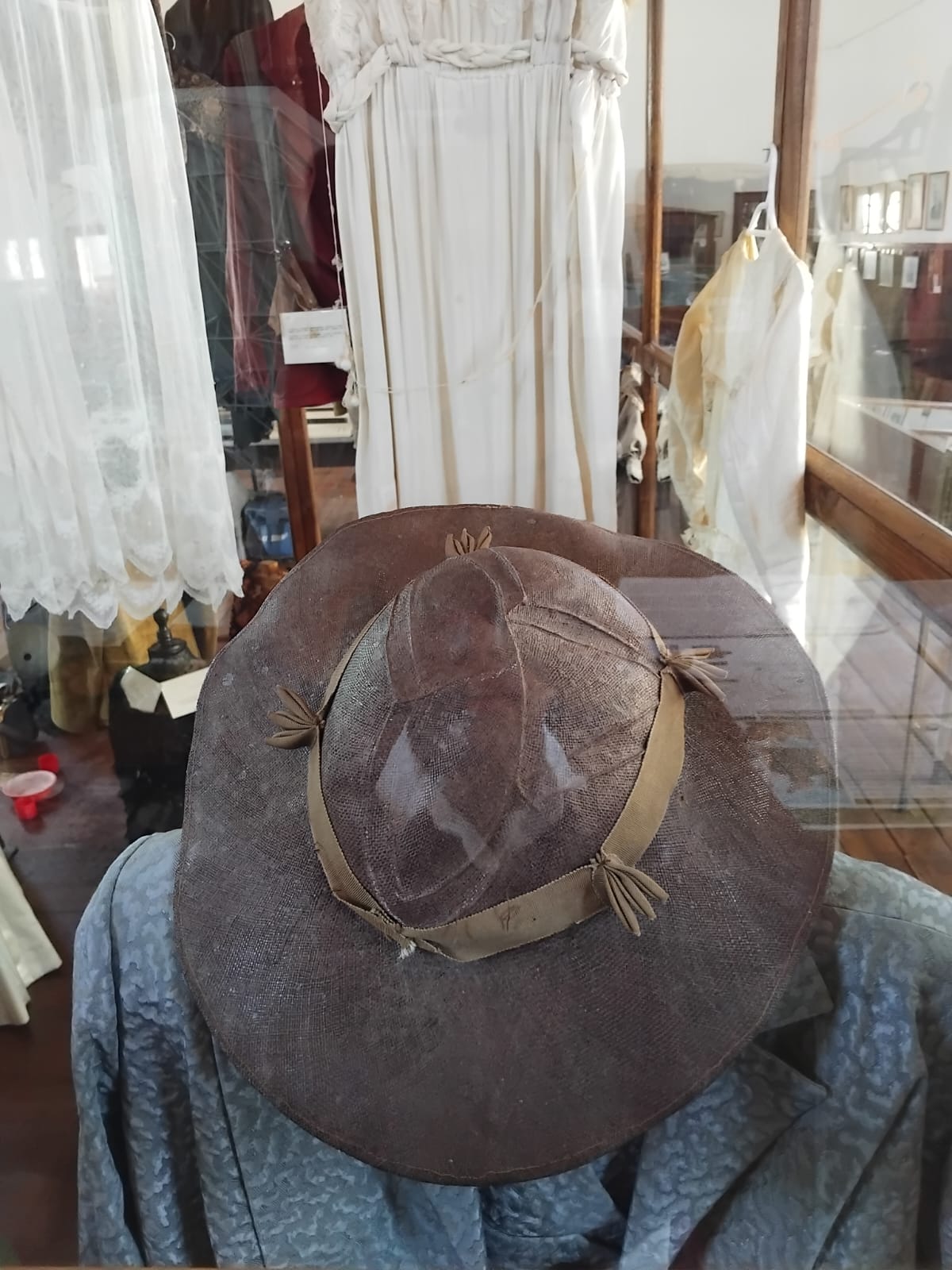
Color and Condition: The hat is a dark brown color and appears aged, with some signs of wear and dust. Structure: It has a large, floppy brim and a rounded crown constructed from several panels. Details: A lighter, tan-colored ribbon band encircles the base of the crown, featuring decorative tassels or knots at intervals.