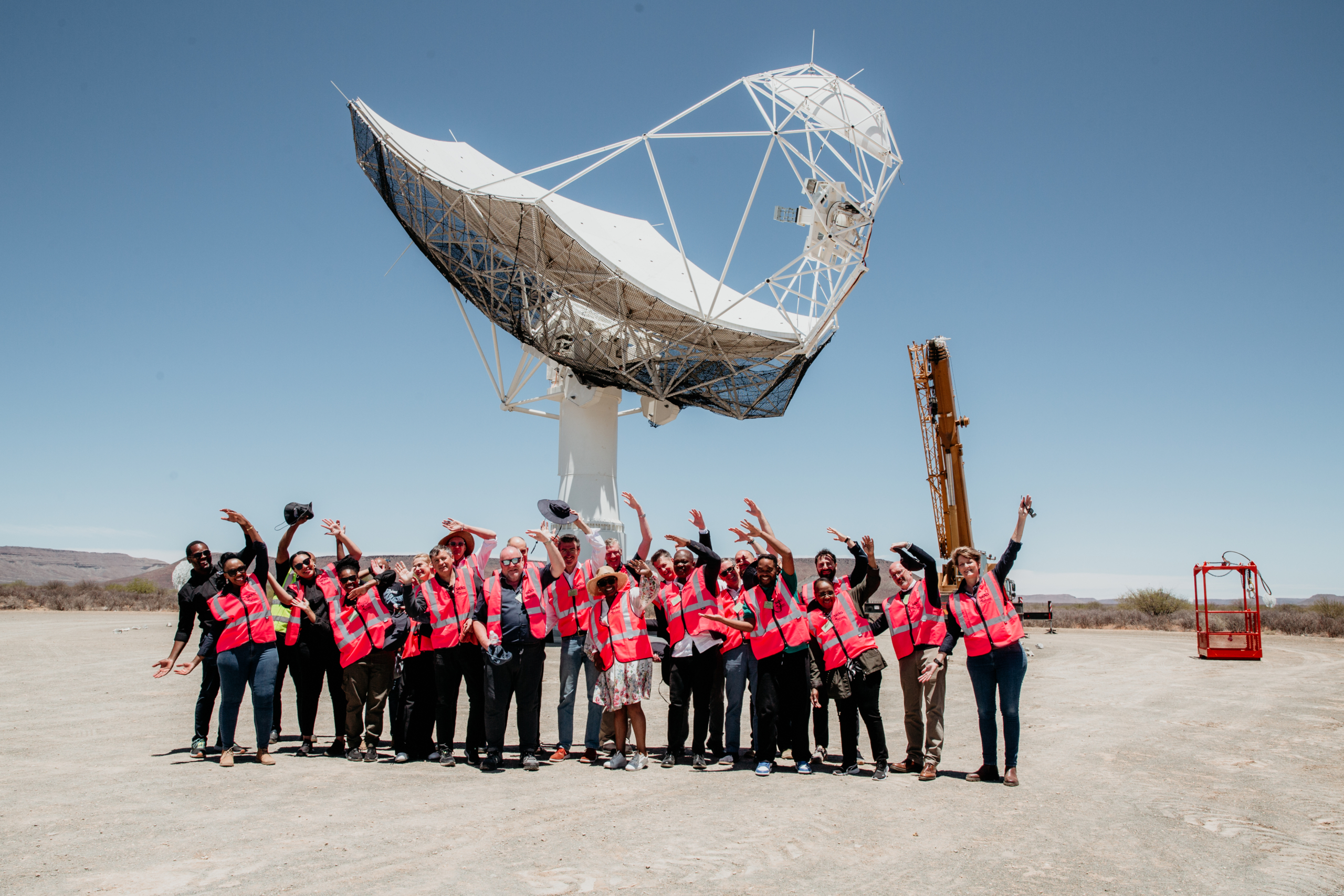

EU Commission Directorate-General for Research and Innovation and several dignitaries visit SKA site in Losberg
A historic visit to the SKA site at Losberg in the Northern Cape took place last month when the European Commission Directorate-General for Research and Innovation, Marc Lemaître, and other high-level dignitaries were hosted on Tuesday, 26 November 2024.
The visit was Lemaître’s first trip to South Africa since his appointment in 2023, and was a unique opportunity to establish high-level high-level relations between SARAO, the Square Kilometre Array Observatory (SKAO) and the European Commission (EU).
Several officials from the EU, the Spanish Embassy, the Swedish Embassy, the SKAO, the National Research Foundation (NRF), the South African Departments of Planning, Monitoring and Evaluation (DPME); and Science, Innovation and Technology (DSTI); and SARAO, formed part of the delegation.
The visitors were welcomed to the SKA site at Losberg by the NRF Deputy CEO Dr Angus Paterson, who said that it was an important occasion to welcome such astute guests to the site. “The NRF along with tremendous support from the DSTI over the last 20 years, is quite pleased to have seen this project from the early days when there was nothing, and today where we can see what collaboration with global partners can do, in particular the European partners that we have,” said Dr Paterson.
SARAO Deputy Director Dr Adrian Tiplady, and Nomfundo Makhubo, SARAO Stakeholder Engagement Manager in the Northern Cape, presented a broad overview of SARAO’s vision, mission and impact in the science, technology and engineering community locally and internationally, before DG Lemaître expressed his thoughts on visiting the SKA site.
“This project really epitomises the power of international collaboration and how much we can do together when we join up not as Europeans only, or Africans or North Americans only, but when we put our minds to doing the greatest things which our resources and intelligence allow, and i think there is something magical to this quest to push back the boundaries of time,” said Lemaître.
SKAO Director-General Prof. Phil Diamond spoke about the importance of forming relationships with global partners and how it benefits the organisations involved: “The SKA and its implementation should be seen by the European Commission and its member states as possibly the most successful passage from a research infrastructure concept to delivery that they have ever supported. It is global and international, and the SKA is where it is because of the facilitation by a European core, conceptually strongly influenced by European scientists and supported strongly by early framework funding,” said Prof. Diamond.
The Deputy Minister of Science, Technology and Innovation, Nomalungelo Gina made the final remarks before the commencement of the site tour and reiterated the department’s pride in the SKA project.
“South Africa, and the Department of Science, Technology and Innovation in particular, is proud and honoured to be part of this global success, and our commitment to the project and the various international partnerships is unwavering. Today marks a significant moment in our collaboration as we explore the possibilities that lie ahead in science, technology, and innovation. The SKA site is a beacon of what can be achieved through international cooperation and shared vision. I am certain that our local scientific community, which has grown exponentially and transformed over the past decade, will continue to produce groundbreaking science from the future SKA-Mid telescope, as it happens with the MeerKAT telescope,” said Gina.
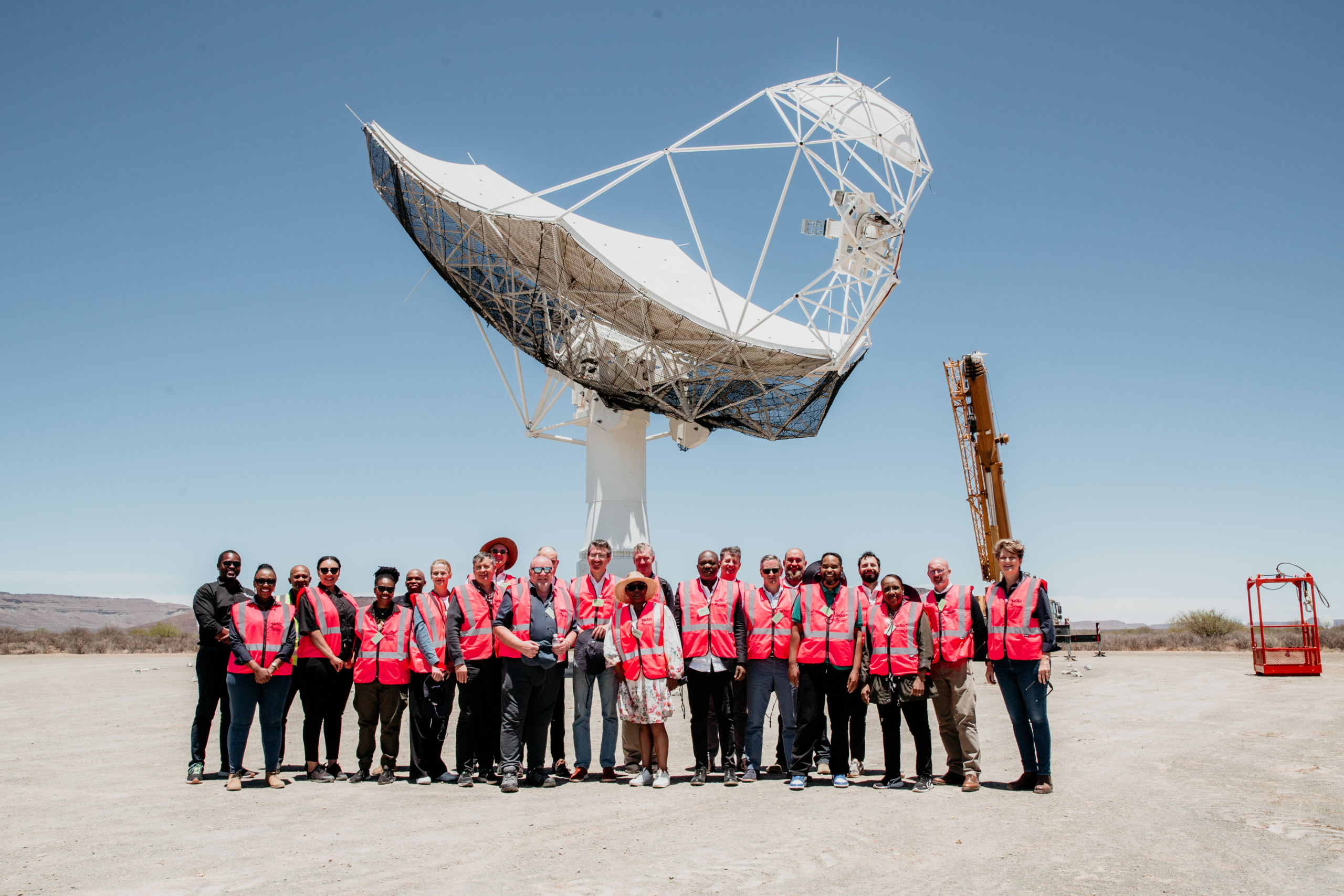
Following the formalities, the visitors were taken on a tour of the Karoo Array Processor Building, the Data Centre, a drive past the MeerKAT precursor KAT-7, the Max Planck Institute SKA Prototype dish, the Hydrogen Epoch of Reionisation Array, followed by a photo opportunity at MeerKAT dish M047.
The visitors were treated to lunch in the Dish Shed on site, before continuing their journey.