
Innovating for impact: Fort Hare students harness Open Data and AI to uplift communities in the Eastern Cape
An Open Data for Social Impact Challenge was hosted by the South African Radio Astronomy Observatory (SARAO) in partnership with the Luxembourg Institute of Science and Technology (LIST) and the University of Fort Hare from 3 – 6 November 2025.
The Challenge, a new initiative being piloted under SARAO’s Big Data Africa programme, aims to inspire and equip postgraduate students with interdisciplinary skills in open data and artificial intelligence (AI) in creating data-driven applications that address community challenges. Apart from introducing students to concepts of open data and AI, the Challenge provides students with the guidance and mentorship needed to develop their community-focused innovations, transforming their ideas to practical applications.
The first Open Data for Social Impact Challenge focused on harnessing Earth Observation (EO), open data and AI to address social challenges in agriculture, rural development and community welfare. By partnering with the University of Fort Hare for this first Challenge, emphasis was placed on the social challenges faced by rural and urban communities in one of South Africa’s most impoverished provinces, the Eastern Cape province.
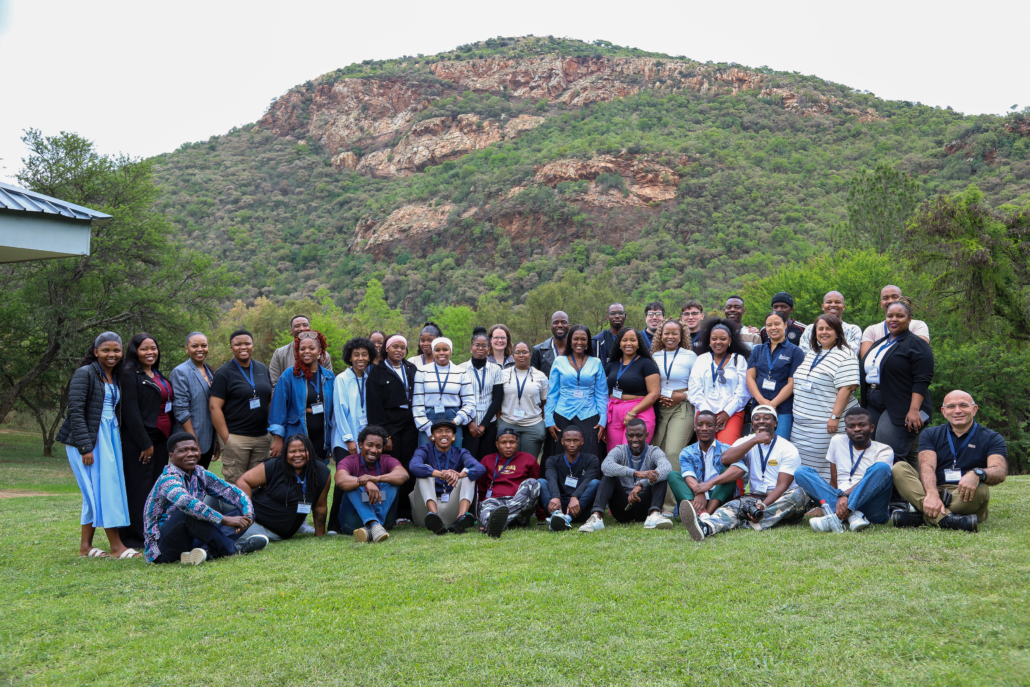
Twenty-five postgraduate students from the University of Fort Hare participated in the first Open Data for Social Impact Challenge, which was hosted close to SARAO’s Hartebeesthoek Radio Astronomy Observatory (HartRAO) in Muldersdrift, Gauteng
Twenty-five postgraduate students from the University of Fort Hare participated in the first Challenge, which was hosted close to SARAO’s Hartebeesthoek Radio Astronomy Observatory (HartRAO) in Muldersdrift, Gauteng. The students were studying towards an honours, master’s or doctoral degree, with a few graduates seeking employment additionally invited to participate in the event. The area of specialisation of the students included geographical information systems (GIS), remote sensing, computer science, geography, mathematics, physics, among other fields of study.
The Challenge kick-started with a morning of engagement with the students that included inspirational talks by exceptional alumni of the 5th Big Data Africa School. The alumni presented highlights in their research or career to inspire their peers in undertaking the Challenge. The second half of the day was dedicated to exploring applications of EO and the fundamentals of AI for EO data, which allowed the students to start conceptualising their data-driven innovations. On the second day of the Challenge, students were introduced to Digital Earth Africa and its Sandbox platform, with partner Digital Earth Africa providing step-by-step guidance on how students can access EO data and digital notebooks hosted on their cloud platform.
The ideation and prototyping sessions were led by researchers from LIST and Digital Earth Africa, which involved students designing their interdisciplinary use cases combining EO, open data and AI. This was accomplished through guided group sessions and informal campfire discussions, with the groups presenting their use cases on the final day of the Challenge. Some of the use cases included waste management in detecting illegal dumping sites to inform municipalities / communities, early-warning systems for flood evacuations with a special focus on underserved communities living downstream of dams, AI-driven spatial planning for housing developments using geospatial data to help inform decisions made by housing developers and municipalities, amongst others.
“What we witnessed this week is the spark of a new approach to skills development, open data, and AI for good — one rooted in the ambition to serve African communities. The Challenge was never about coding or technology alone; it was about understanding the full data value chain, from collection and access to interpretation and impact,” commented Dr Slim Turki, Senior Research Scientist at LIST. Turki further adds that “Students from Historically Disadvantaged Institutions are not just learners — they are key players in innovation for the community, with the community. They are the bridge between technology and impact, between science and society. This is not just a training; it’s a proof of concept for how inclusive, multidisciplinary co-creation can drive real social change.”
The Open Data for Social Impact Challenge included a visit to the HartRAO facility where students were exposed to how radio astronomy and space geodesy data are collected by ground receivers on these sites. The site visit to HartRAO gave students a unique insight to the instruments collecting EO, radio astronomy and space geodesy data. This aspect was built on a pre-workshop hosted at the University of Fort Hare where students were introduced to the functioning of radio telescopes and synergies with EO instruments. At the pre-workshop, students gained practical experience on the instrumentation used to collect EO and radio astronomy data by building a low-cost, helicone antenna, designed by Ghanaian PhD student, Albert Forson, currently based at the University of Mauritius.
GIS and Remote Sensing Lecturer at the University of Fort Hare, Phila Sibandze, further commented on this aspect of the workshop by adding that “The visit to the HartRAO site was a truly enlightening experience for the students, as they gained firsthand experience with the technology and various antennas used in radio astronomy. They witnessed a demonstration illustrating how the antennas work and how their design and optimisation have evolved since the 1950s, showcasing that South African space scientists are keeping up with technological advancements in both fields. Additionally, a two-day mini-workshop at the University of Fort Hare’s Alice campus focused on the synergies between radio astrophysics and Earth observation using helicon antennas. The workshop not only provided the students with essential open-data skills but also emphasised the remarkable potential of bringing together diverse minds around common technological interests.”
Dr Bonita de Swardt, SARAO Programme Manager: Strategic Partnerships for Human Capital Development, and main organiser of the Open Data for Social Impact Challenge, says: “With the tremendous success in hosting the first Open Data for Social Impact Challenge, we hope to run more of these Challenges in the future to complement our current training in digitalisation and data science”.
She further adds that, “The vision for this Challenge was always to empower African graduates with interdisciplinary skills in open data and AI for them to become active citizens who are passionate about driving change through community-driven innovations. I would like to express my immense gratitude to all our partners who have boldly come on board in supporting this transformative training initiative.”
Contact
Dr Bonita de Swardt, SARAO Strategic Partnerships for Human Capital Development
Email: bonita@sarao.ac.za
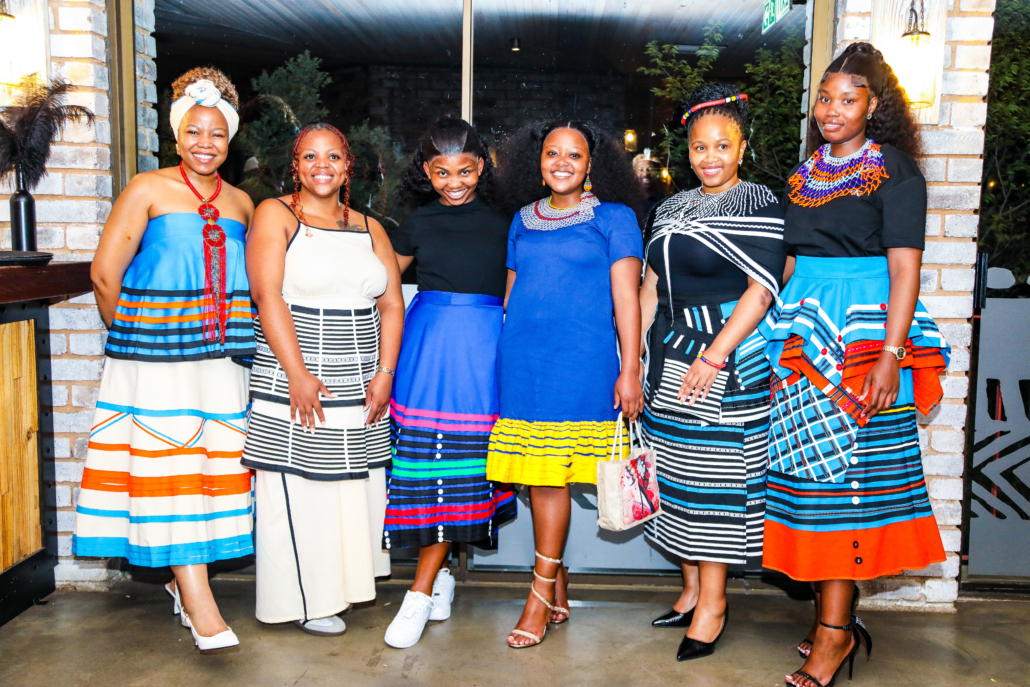
A cultural dinner was held as part of the closing of the Challenge at the end of the week.
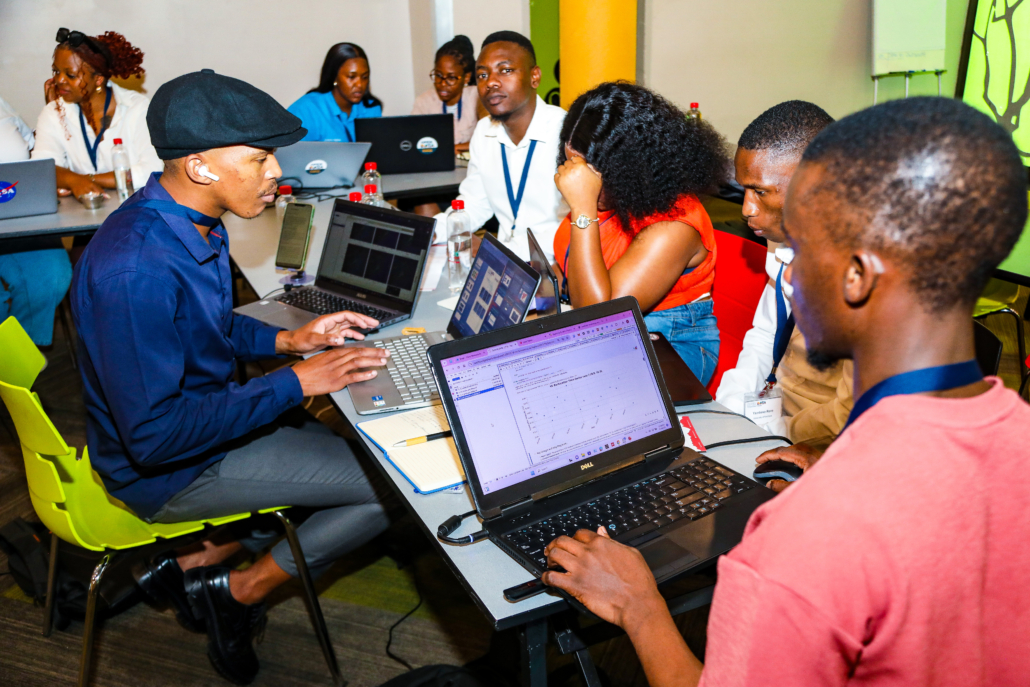
The Students working on their data-driven innovations during the group work sessions.
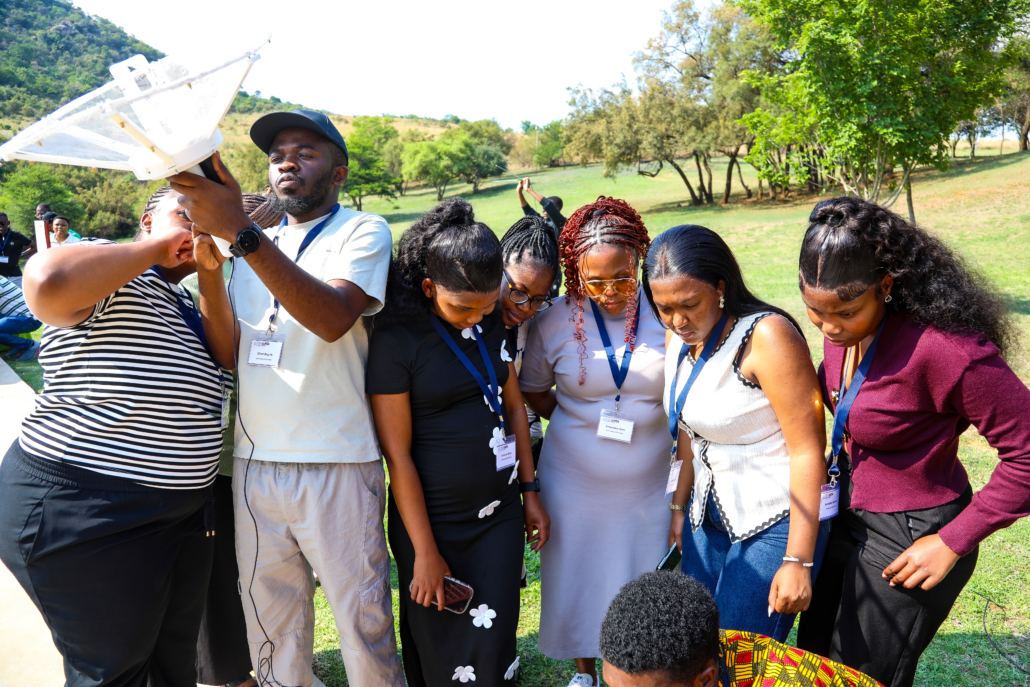
A helicone demonstration
The week included a visit to the HartRAO facility where students were exposed to how radio astronomy and space geodesy data are collected by ground receivers on these sites. The site visit to HartRAO gave students a unique insight to the instruments collecting EO, radio astronomy and space geodesy data.
