
World Science Journalists experience SARAO’s Losberg Site in the Karoo
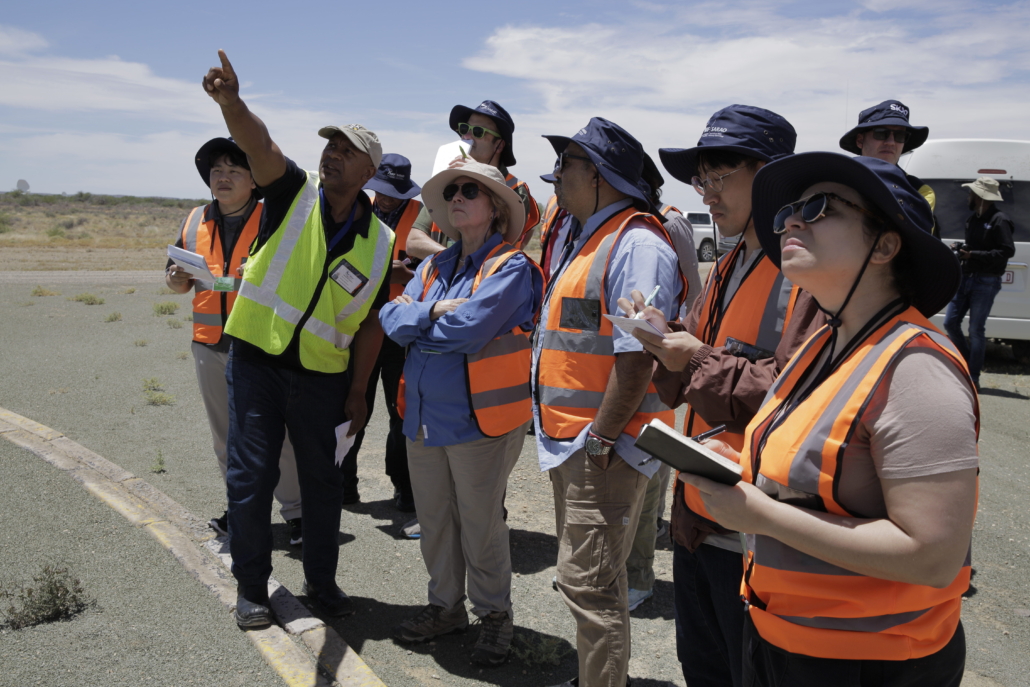
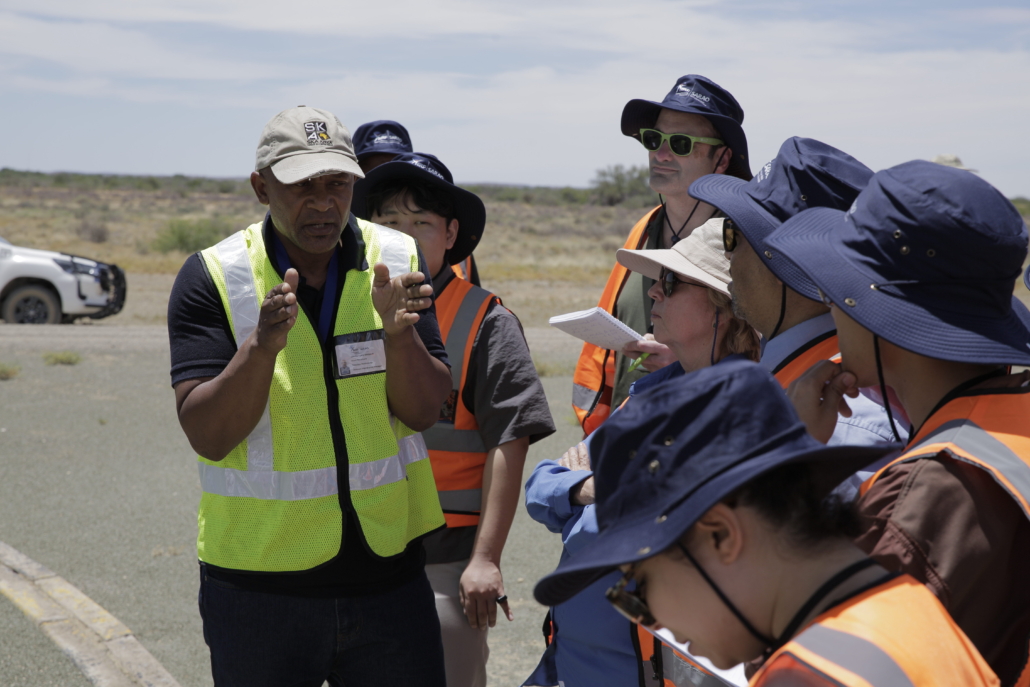
The South African Radio Astronomy Observatory (SARAO) proudly hosted a high-profile field trip for ten science journalists on Wednesday, 3 December 2025, providing them with an in-depth look at South Africa’s cutting-edge radio astronomy facilities, including the MeerKAT telescope and the future Square Kilometre Array (SKA) site.
The visit was part of the 13th World Conference of Science Journalists (WCSJ) 2025, which convened in Pretoria, South Africa, from 1-5 December 2025, under the theme Science journalism and social justice: journalism that builds understanding and resilience. This exclusive site visit, co-hosted with the Department of Science, Technology and Innovation (DSTI) and the SKA Observatory (SKAO), brought together journalists from across the globe, including the United States, South Korea, Brazil, Poland, Mexico, Kenya, Yemen; and South Africa.
An immersion into astronomy
The day’s extensive program was directed by Milisa Kentane, SARAO’s Communications and Stakeholder Relations Manager.
Highlights of the itinerary included:
- A welcoming and briefing session led by Kentane.
- Presentations on SARAO’s role and projects by Dr Adrian Tiplady, Deputy Managing Director: SARAO.
- A guided tour of the facilities, starting with the Karoo Array Processing Building (KAPB) and Data Centre led by André Walker, SARAO Data Centre Manager Dawie le Roux, SARAO Site Manager;.
- A drive past key telescope arrays: KAT-7, the MPI SKA Prototype Dish, and the Hydrogen Epoch of Re-ionization Array (HERA), followed by a stop at the MeerKAT core. The tour of the MeerKAT core was guided by Sizwe Seranyane, Telescope Maintenance Manager.
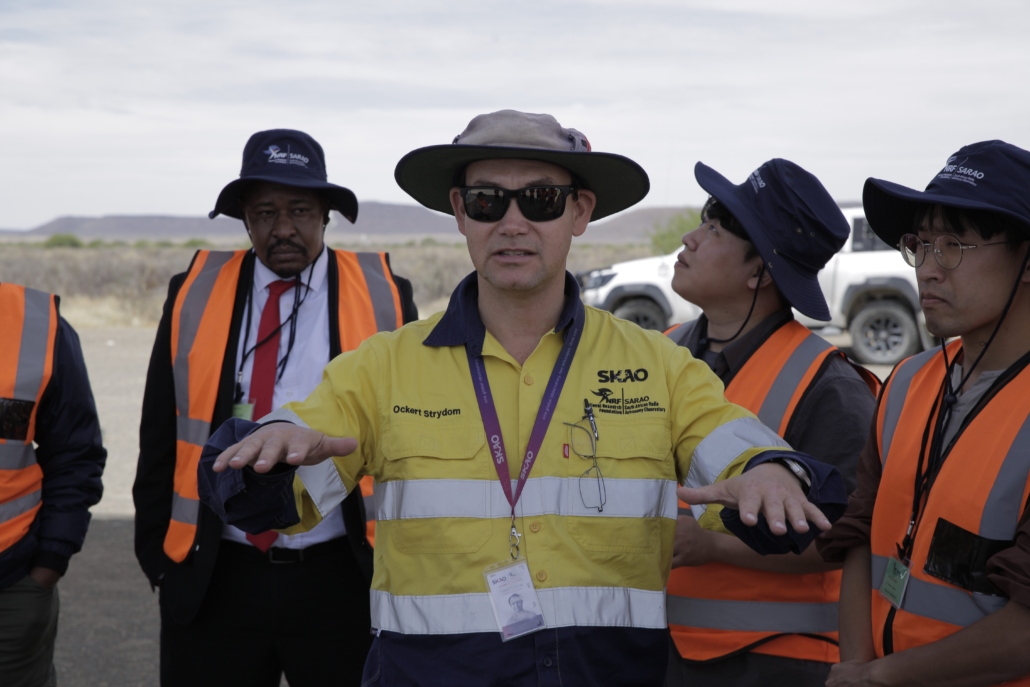
- A visit to the SKA First Dish SKA063 led by Dawie le Roux. The SKA-Mid tour was also conducted by Ockert Strydom, Domain Specialist: Mechanical Engineering at SKAO.
Protecting the quiet sky
The visit underscored the need for the region to remain a radio-quiet environment for the high- and medium-frequency arrays. Strict Radio Frequency Interference (RFI) protocols were enforced: cell phones and other personal devices with Bluetooth and Wi-Fi capabilities were not permitted on site, had to be powered down, and were placed in secure, lockable safes. Furthermore, any cameras or equipment brought onto the site required prior specification submission and approval from the SARAO RFI team.
Building the world’s largest telescope
The journalists witnessed the progress of the SKA project, an international collaboration to construct the world’s largest radio telescope with a total collecting area of one square kilometre. The SKA Mid-Telescope Array is hosted in South Africa, which is a Founding Member of the SKA Observatory (SKAO). SARAO manages all radio astronomy initiatives and facilities in South Africa, leading the nation’s participation in the SKA’s engineering, science, and construction. The project serves as a significant catalyst for the development of next-generation technologies and skills for the 4th Industrial Revolution in South Africa.
We thank all the journalists for their interest and look forward to the stories that will emerge from their experience, sharing the wonder of South African radio astronomy with the world.