Big Data Africa School prepares Africa’s future researchers for AI-driven medical imaging and quantum computing
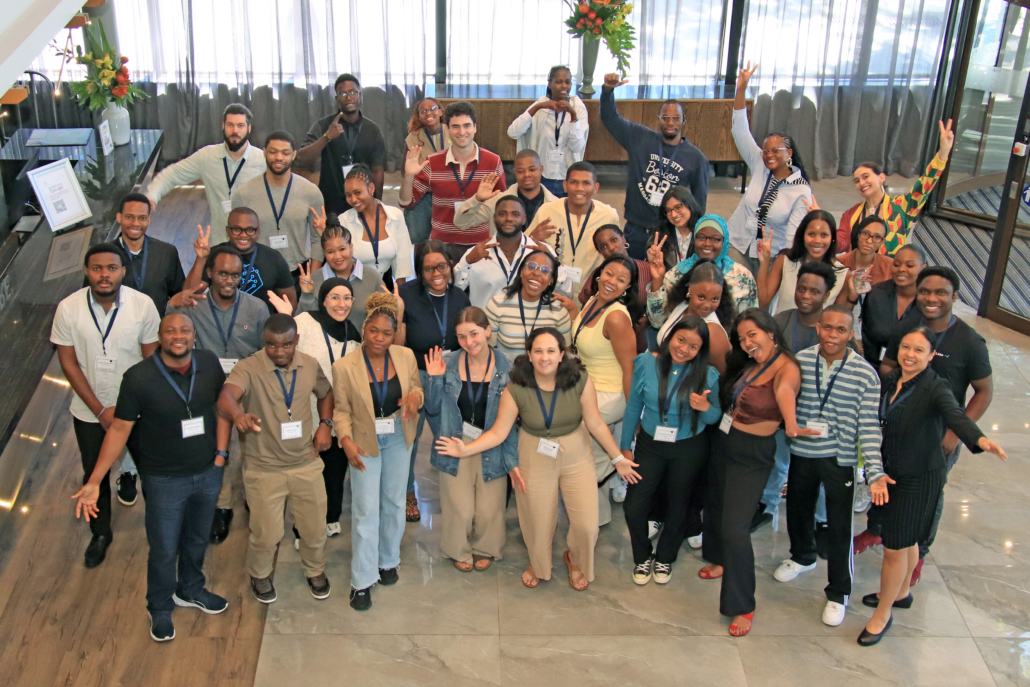
Above: Participants in the 6th Big Data Africa School which took place in Cape Town from 5 to 10 October 2026.
The South African Radio Astronomy Observatory (SARAO) hosted its 6th Big Data Africa School in Cape Town from 5 to 10 October 2026.
The school focused on the application of machine learning, deep learning and quantum computing techniques to medical imaging, bringing together leading researchers and African postgraduate students to tackle real-world health challenges using data science.
For the first time, the Big Data Africa School introduced participants to quantum computing as part of its technical programme, reflecting the growing potential of quantum technologies to transform data-intensive scientific research. By combining classical artificial intelligence (AI) with emerging quantum computing approaches in a real-world application such as medical imaging, the school provided participants with early exposure to one of the most exciting frontiers in computational science, placing them at the cutting edge of applied AI and quantum research.
The 6th Big Data Africa School was delivered through the Development in Africa with Radio Astronomy (DARA) project, which was funded by the UK International Science Partnerships Fund. Key partners included SARAO, DARA, IBM Research Africa, the Inter-University Institute for Data Intensive Astronomy (IDIA) and the Department of Science, Technology and Innovation (DSTI). Contributing research institutions included the Hertie Institute for AI in Brain Health (Germany), EPFL (Switzerland), the Technical University of Denmark, Boehringer Ingelheim (Germany), the University of Cape Town and the University of KwaZulu-Natal. IDIA provided the cloud computing platform and technical infrastructure that enabled students to work on large-scale datasets throughout the week.
Twenty-six students from seven African countries participated in this year’s school, representing Botswana, Ghana, Kenya, Madagascar, Namibia, South Africa and Zambia. More than half of the participants were women, making this the third consecutive Big Data Africa School to achieve a majority female cohort and reflecting SARAO’s continued commitment to improving gender representation in data science and related fields.
Participants included honours, master’s and doctoral students from disciplines such as computer science, data science, bioinformatics, engineering and the physical sciences. The school is designed to support students at different stages of their postgraduate studies by combining foundational training with collaborative research experience.
The Big Data Africa School aims to introduce science and engineering graduates to fundamental data science tools and techniques while providing hands-on experience through real-world, project-based learning. Working in multidisciplinary teams under the guidance of local and international experts, students apply advanced computational methods to address challenges relevant to Africa and beyond. Since its inception in 2017, the school has covered thematic areas including radio astronomy, Earth observation and health, with medical imaging returning as the focus for a second time in 2026.
Participants were introduced to the fundamentals of quantum computing and quantum machine learning through a series of specialist lectures. The programme included introductory lectures on quantum computing for medical imaging, an Introduction to Quantum Machine Learning presented by Shivani Pillay (University of KwaZulu-Natal, Fraqtal Technologies), as well as lectures on probabilistic programming and responsible AI by experts from EPFL and the Technical University of Denmark. These sessions equipped students with the knowledge to explore how next-generation computing technologies can complement conventional machine learning approaches in solving complex biomedical challenges.
This year’s school featured five research projects spanning explainable AI, fairness in AI-based medical image classification, quantum computing for biological discovery, MRI image reconstruction using generative deep learning, and AI-based prognostic biomarkers for idiopathic pulmonary fibrosis. Students spent nearly half of the six-day programme working in teams to develop solutions before presenting their findings to a panel of judges at the end of the school.
Beyond the technical programme, students also participated in industry-focused career sessions, presentations from Big Data Africa alumni and networking opportunities with researchers from academia, government and industry. These activities exposed participants to a range of career pathways while strengthening the growing African data science community.
British Consul General, Colin Leeman, delivered closing remarks emphasising that “The Big Data Africa School brings to life the real value of DARA and demonstrates what sustained international partnership can achieve. The school brought together talent and expertise from the across Africa to build skills, exchange knowledge and create lasting scientific networks.” Leeman attended the final group presentations and observed that, “The exceptional quality of the presentations this week demonstrates the value of investing in people and partnerships that strengthen our scientific communities.”
Dr Bonita de Swardt, organiser of the Big Data Africa School and SARAO’s Programme Manager: Strategic Partnerships for Human Capital Development adds that, “Over the past decade, SARAO’s Big Data Africa programme has evolved into one of Africa’s leading capacity development initiatives in data science, equipping hundreds of young researchers with advanced computational skills needed to tackle complex scientific and societal challenges. The continued success of the Big Data Africa Schools reflects the strength of our international partnerships and our shared commitment to nurturing Africa’s next generation of data scientists.”
De Swardt further adds, “We are especially proud that this is the third consecutive school in which women have formed the majority of participants, demonstrating that targeted investment and an inclusive learning environment can help create more equitable opportunities in data science, AI and emerging technologies.”
Through initiatives such as the Big Data Africa School, SARAO continues to build advanced data science capacity across the African continent, equipping young researchers with the computational skills, international networks and collaborative experience needed to address complex scientific and societal challenges.
Comments from Participants in the 6th Big Data Africa School:
“Attending the 6th Big Data Africa School was a really valuable experience. I enjoyed meeting and working with people from across Africa from different research backgrounds and learning more about the applications of AI and machine learning in medicine. Throughout the project, our mentor guided us through the problem-solving process, and presenting our progress each day helped me to build confidence in my abilities and become more comfortable with public speaking. Getting hands-on experience with medical imaging and being introduced to other research fields, such as radio astronomy, also opened my eyes to the wide range of possibilities within data science. I am so grateful to have been part of it, and I hope that many more students have this opportunity in the future.”- Heather Teixeira (BSc Honours student, University of Cape Town, South Africa)
“My ability to work in a group has improved the most during the school. Collaborating with participants from different academic and professional backgrounds allowed me to exchange ideas, learn from different perspectives, and contribute to a common research objective. The experience also helped me improve my communication skills, listen more effectively to others, and explain technical concepts more clearly. These skills are essential for interdisciplinary research, scientific collaboration, and future projects involving data scientists, mathematicians, and healthcare professionals.” – Tombolaza Canut Filamant (Doctoral candidate, University of Toamasina, Madagascar)
“The Big Data Africa School 2026 was an exceptionally valuable and inspiring experience that deepened my practical skills in large-scale data analysis and directly supported both my research interests and career development. It not only strengthened my technical skills but also opened exciting new directions for my research and career that I am truly excited about.” – Brandon Manase Odhiambo (4th year BEng student, Technical University of Mombasa, Kenya)
“I really enjoyed being part of the Big Data Africa School, and it exceeded my expectations. I appreciated meeting and connecting with people from different backgrounds, hearing from the invited speakers, and learning about quantum computing in one of the presentations sparked my interest and made me excited to explore the field further.” – Litebele Litebele (Masters student, University of Zambia, Zambia)
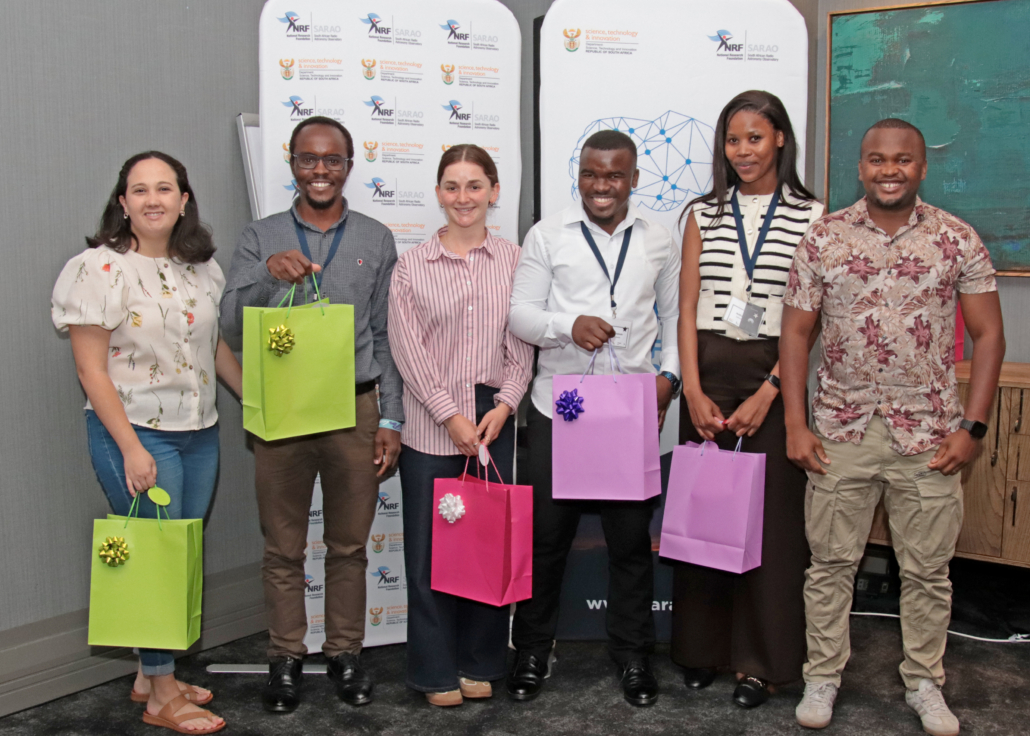
Above: Winning team the Fibro 5 explored AI / ML for prognostic biomarkers in Idiopathic Pulmonary Fibrosis and was mentored by Dr Lameck Anugongo (Boehringer Ingelheim) (right of group).
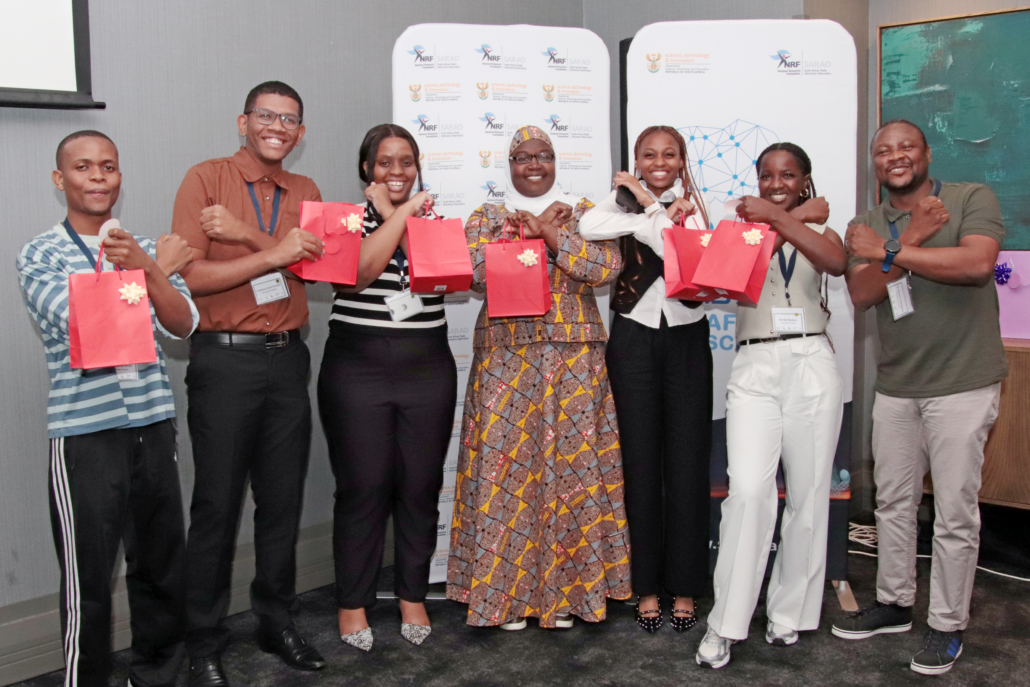
Above: Runner up team VisionX undertook a project in Self-Explainable AI vs. Post-Hoc Explanations mentored by Dr Kerol Djoumessi (Hertie Institute for AI in Brain Health) and Dr Adeshina Odugbemi (University of Cape Town) (right of group).
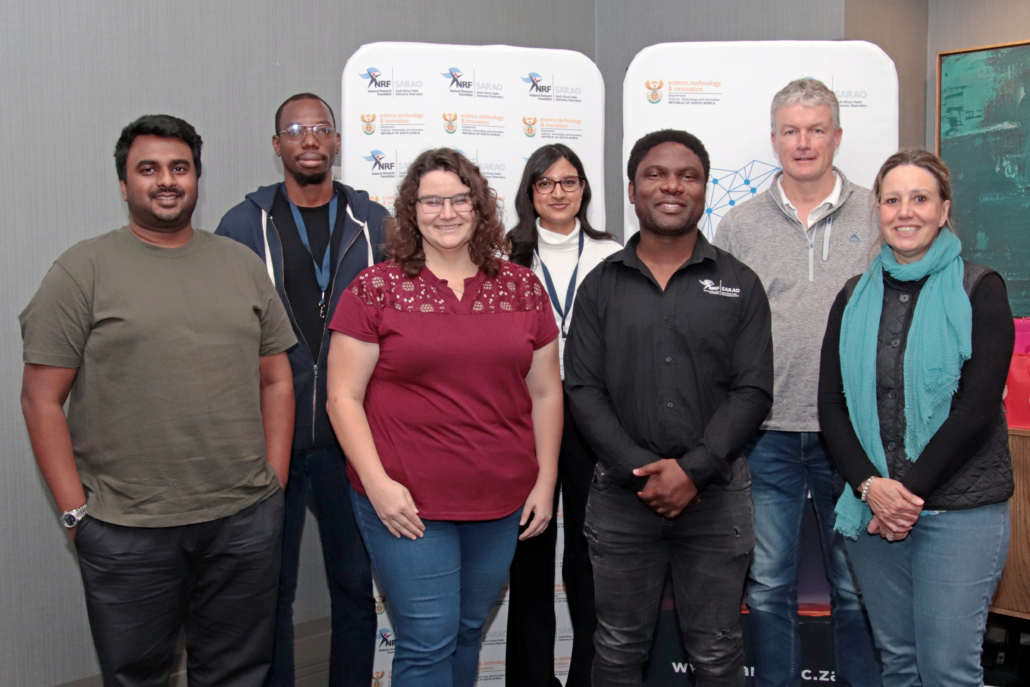
Above: Panel of judges at the 6th Big Data Africa School. Seen left to right is Ian Joel David (Fraqtal Technologies), Daniel Egbo (SAAO/UCT), Dr Sally MacFarlane (IDIA), Shivani Pillay (UKZN), Tumelo Mangena (SARAO), Dr Jasper Horrell (DeepAlert) and Dr Carla Mitchell (SARAO).
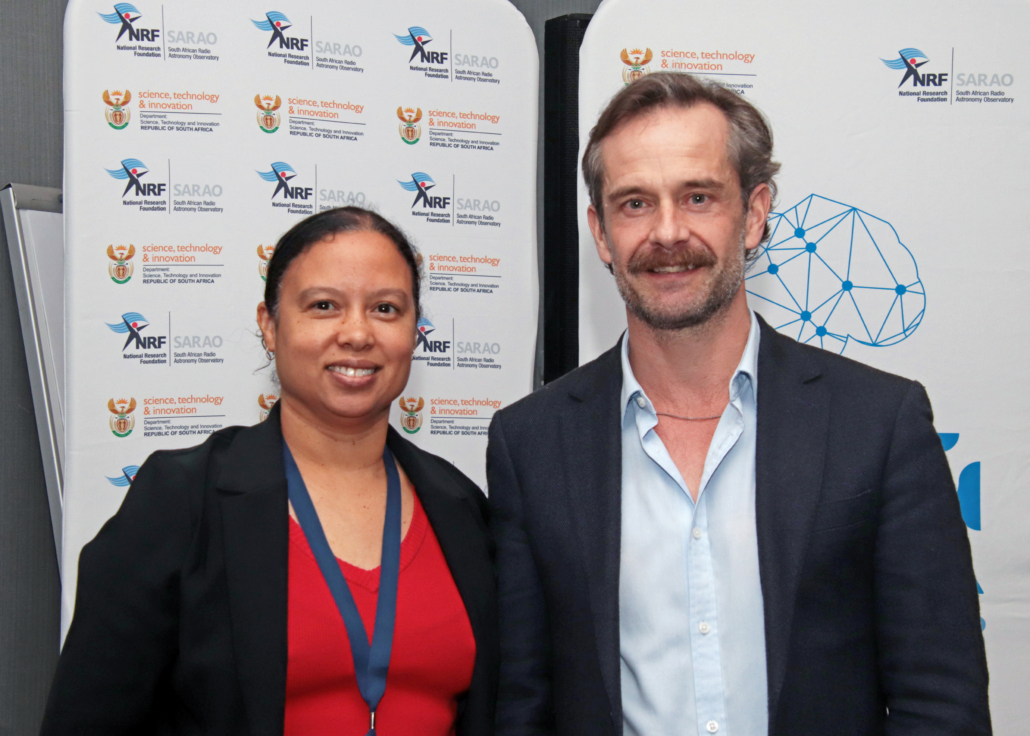
Above: Closing remarks for the 6th Big Data Africa School were delivered by the British Consul General, Colin Leeman (right), pictured with organiser of the Big Data Africa Schools and SARAO Programme Manager: Strategic Partnerships for Human Capital Development, Dr Bonita de Swardt (left).
